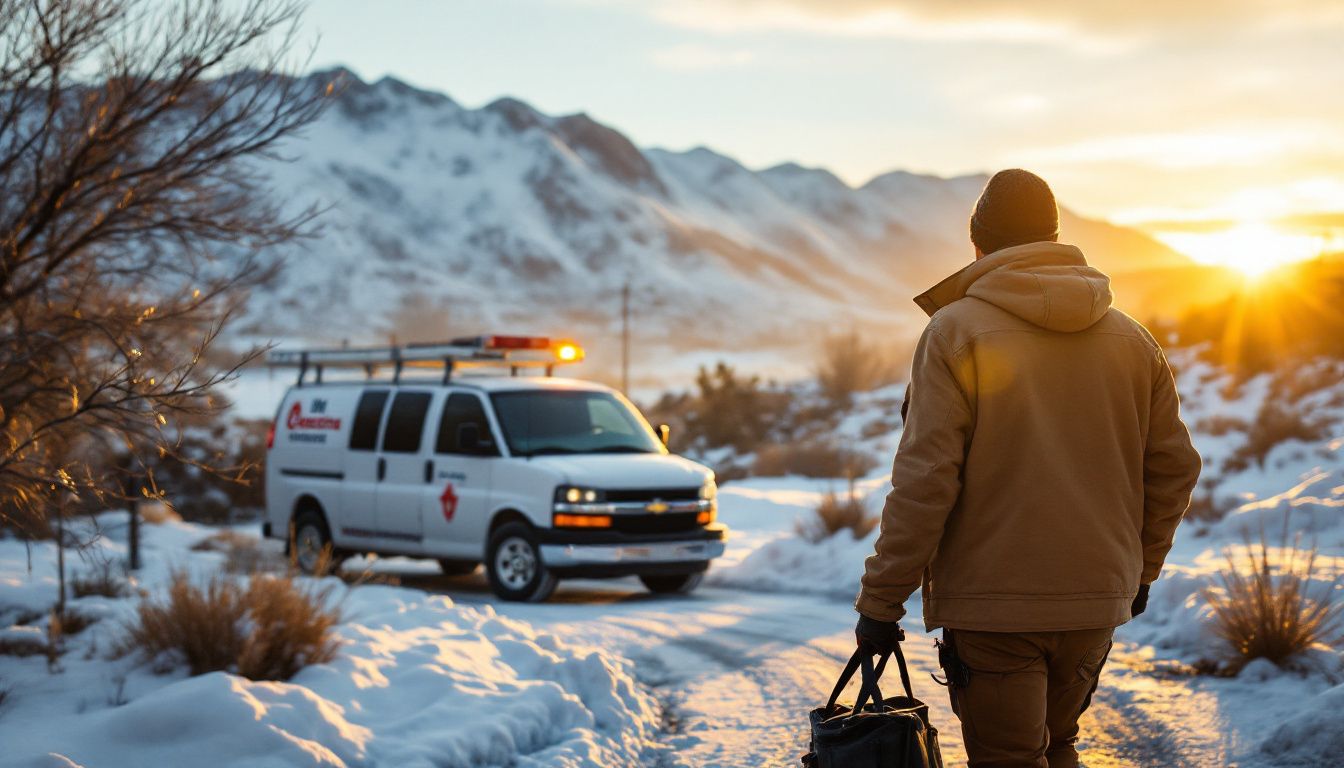
The first hard freeze in the Truckee Meadows usually lands somewhere between late October and mid-November. When it does, furnaces that sat idle all summer get switched on and promptly fail, the pipes in unheated garages start to freeze, and the first real storm drops a foot of snow on Incline Village and the Carson Valley. For a lot of Northern Nevada homeowners, that cold morning is the moment they go looking for help — fast.
Here's the part most service businesses miss: the company that wins that job is almost never the cheapest, and it's rarely the one with the nicest truck. It's the one that shows up first when a cold, slightly panicked homeowner types "furnace not working Reno" into their phone at 6am — and then answers before the next shop does. Winter demand is a surge you can see coming from a mile away. This is how to be ready for it before the first storm, not scrambling after it.
The Northern Nevada winter demand curve is steeper than you think
Winter demand for heating, plumbing, and snow service doesn't ramp up gently — it spikes. A single hard cold snap can triple an HVAC company's call volume in one day, and a frozen-pipe morning does the same for plumbers. These searches are overwhelmingly mobile and overwhelmingly urgent. The homeowner isn't opening five tabs to compare quotes; they're calling the first business that looks legitimate and actually picks up.
That urgency is exactly why winter is the season where zero-click behavior hurts the most. As we covered in our piece on zero-click search hitting 78% of local queries, many people now decide who to call straight from the search results and the map — before they ever land on a website. If your Google Business Profile doesn't instantly show that you're open, nearby, and well-reviewed, you've lost the job before your homepage even loads.
Your pre-winter checklist — do this before the first storm
None of what follows is new. It's the same fundamentals we write about all year. But winter compresses the timeline and raises the price of getting them wrong, so work through them now, in October, while you still have slack in the schedule.
1. Winterize your Google Business Profile
Your profile is the first thing a freezing homeowner sees, and often the only thing. Confirm your hours — including whether you take emergency or after-hours calls — list your seasonal services explicitly ("furnace repair," "frozen pipe thaw," "snow removal"), and post a fresh seasonal update so the listing looks alive. Our Google Business Profile playbook walks through the fields that actually move the needle. Treat the profile as your real homepage, because in a panic search, it is.
2. Fund your Local Service Ads before demand peaks
If you run Local Service Ads and carry the Google Guaranteed badge, raise your budget before the cold snap, not during it. When call volume triples, so does the competition for the top of the map — a budget that was comfortable in September can run dry by 9am on the first freezing morning in December. Verifying the badge and topping up early means you're visible the exact week everyone is searching.
3. Make sure your site loads on a cold phone outdoors
The winter searcher is standing in a driveway in the cold, on one bar of signal, with zero patience. A page that takes six seconds to load is a page they abandon. Core Web Vitals aren't an abstract SEO score in that moment — they're the difference between a booked job and a bounce. Test your slowest page right now, on an actual phone over cellular, and fix what drags.
4. Answer within five minutes — or don't bother
A winter lead has a shelf life measured in minutes, because the homeowner is working down a list and calling the next name the moment yours goes to voicemail. The five-minute speed-to-lead rule matters all year; in emergency season it's absolute. Decide now who answers after-hours calls and how, because "we'll get back to you tomorrow" means the burst pipe became someone else's customer.
5. Start collecting reviews now, not in January
Reviews are the single biggest trust signal a stranger uses to pick an emergency provider, and they don't appear on demand. Ask every customer this month — and, just as important, reply to the ones you already have. A recent, well-answered stream of reviews is what makes a cold homeowner choose you over the shop with three dusty five-stars from 2023.
6. Set up text follow-up for the overflow
When you can't pick up — and in a real surge you won't always — a fast text keeps the lead warm. As we covered in the SMS and text follow-up playbook, a "Got your message, we can be there by 2pm" text sent inside a minute beats a voicemail every time — especially with the many customers who will never listen to voicemail at all.
7. Know which channel is actually booking the jobs
When the phone is ringing off the hook it's tempting to stop measuring. Don't. Call tracking and attribution tells you whether the surge came from your map listing, your ads, or a neighbor's referral — so next winter you spend on what actually worked instead of guessing.
Publish your seasonal content before the snow, not during it
Search engines need time to find, crawl, and trust a page before it ranks. A "how to prevent frozen pipes" or "when to replace a furnace in a Nevada winter" page published in October has weeks to earn its position; the same page published the morning of the first storm earns nothing that season. If you serve specific areas — Reno, Sparks, Carson City, Gardnerville, Incline Village, and Lake Tahoe — make sure each has a page that reads like it was written for that community's winter, not a template with the town name swapped in. And remember that traffic only pays the bills once it converts: here's how to turn that winter traffic into booked jobs.
Winter rewards the business that prepared in October. The company scrambling to fix its website during the first storm is already losing jobs it won't get back until next year.
Your 30-day pre-winter checklist
- Update your Google Business Profile: hours, emergency availability, seasonal services, and one fresh post.
- Raise or confirm your Local Service Ads budget and verify your Google Guaranteed badge is active.
- Test your site's speed on a real phone over cellular — then fix the slowest page.
- Decide, in writing, who answers after-hours calls and how fast they respond.
- Ask your last 20 customers for a review, and reply to every review from the past year.
- Turn on an automatic text reply for missed calls and form submissions.
- Publish or refresh one seasonal, location-specific page for each town you serve.
- Confirm call tracking is running so you can see what the surge is actually worth.
Don't wait for the first storm
Every item on that list takes days to pay off, not minutes — which is exactly why the work has to happen before demand arrives, not during it. The businesses that own winter in Northern Nevada aren't lucky; they spent a quiet week in October getting found, getting fast, and getting ready to answer. If you want help turning that checklist into a site and an online presence that books jobs all winter, that's the everyday work of our SEO and web design teams. Start a conversation and we'll have you ready before the first freeze.